From the Floor Up: Driving Manufacturing Capacity and Momentum Through Leadership
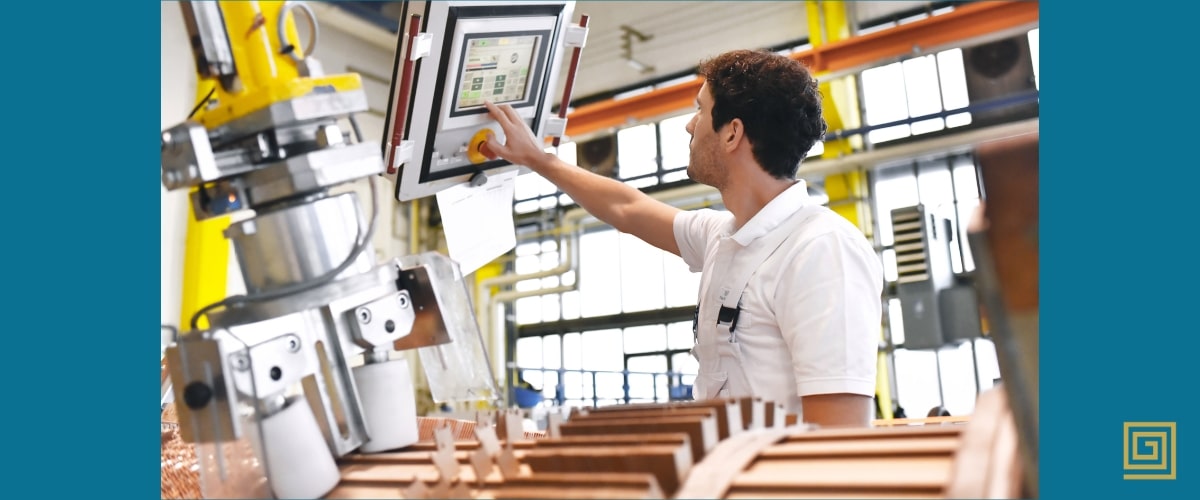
Houston’s manufacturing sector has been undergoing a significant shift, expanding well beyond its oil and gas roots.
In 2025, Apple announced plans to begin building servers with manufacturing partners in Houston, followed by the opening of a new 250,000-square-foot server manufacturing facility in 2026 that was expected to create thousands of jobs. NVIDIA confirmed plans to produce supercomputer parts in the region, partnering with Foxconn to scale production. Other manufacturers, including TMEIC, Envirotech Vehicles, NanoTech Materials, Inc., and Elin Energy, entered the area or expanded around the same time.
This wave of high-tech investment is an economic win for the region, but it also intensifies competition for skilled labor, leadership talent, and operational efficiency. The manufacturers that come out ahead in this environment will not be the ones with the newest equipment. They will be the ones with the strongest leaders.
Today’s manufacturing operations need more than workers who can follow procedures. They need leaders at every level who can drive alignment, build capability in others, and respond to change with confidence. From frontline supervisors to plant managers to senior executives, leadership quality is what determines whether an operation scales or stalls.
The companies that recognize this place leadership development at the center of their strategy, not as a human resources initiative, but as a competitive one. The manufacturers who will lead Houston’s next chapter of growth are those who invest in their leaders with the same discipline they bring to all other parts of the operation.
How Strong Leaders Drive Measurable Business Outcomes
Leadership quality is not an abstract concept. It shows up in your production numbers, your safety record, your turnover rate, and your ability to grow without losing ground. Well-developed leaders create the alignment, accountability, and engagement that drive results across every part of the operation.
Increased Productivity and Efficiency
Productivity problems in manufacturing are often diagnosed as process problems when they are actually leadership problems. When supervisors set unclear expectations, avoid difficult conversations, or manage tasks instead of people, the result is confusion, rework, and wasted time.
Supervisors who are developed as leaders do the opposite. They communicate expectations clearly, coach employees through problems rather than simply correcting them, and create team environments where people know what is expected and why it matters. When your leaders understand the purpose behind the work and communicate it consistently, focus improves, problems get resolved faster, and output follows.
Improved Retention in a Competitive Talent Market
Turnover is expensive in any industry, but in manufacturing it carries an especially high operational cost. Replacing a frontline worker carries high costs when you account for recruiting, onboarding, training, and lost productivity during the transition.
With companies like Apple and Nvidia having added thousands of jobs to the Houston market, competition for skilled frontline and technical labor is more intense than it has been in years. In that environment, compensation alone is not enough to hold good people. Employees who feel unsupported, unrecognized, or poorly managed will leave for an alternative.
Strong leaders change that equation. They build trust with their teams, recognize contributions, develop people’s skills, and create an environment where employees feel invested in the work. When your leaders are developed to do these things consistently, retention stops being a recurring problem and becomes a natural outcome.
Improved Safety and Operational Control
Compliance systems, safety checklists, and standard operating procedures are essential to a well-run manufacturing operation. But those tools only work as well as the people responsible for enforcing and modeling them. A checklist on a clipboard does not create a safe workplace. A leader who takes safety seriously, reinforces it consistently, and responds swiftly when standards slip does.
Leaders who are trained to manage risk, hold their teams accountable, and address unsafe behaviors in the moment are the reason compliance systems function as intended. They create the conditions where safety is not a box to check but a standard the entire team owns, resulting in fewer incidents, less downtime, and an operation that runs with greater control and consistency.
A Scalable Workforce Ready for Growth
Growth is essential to any company’s long-term survival, but it also has a way of exposing leadership gaps. When a manufacturing operation expands quickly, whether by adding shifts, taking on new contracts, or integrating new technology, the pressure falls on supervisors and middle managers first. If those leaders have not been developed, the cracks show up fast: communication breaks down, new team members don’t get proper onboarding, accountability slips, and quality suffers.
Leadership development builds the pipeline that makes scaling possible. When you invest consistently in developing leaders at every level, you are not scrambling to identify who can step up when growth demands it. You already know, because you have been building those people all along. Organizations with strong leadership benches can expand with confidence because the foundation is already in place.
Greater Innovation and Agility
Manufacturing environments are changing faster than they used to. Automation, new materials, shifting customer demands, and evolving compliance requirements all require operations to adapt continuously. Whether that adaptation happens smoothly or painfully often comes down to leadership.
Leaders who model curiosity, transparency, and a problem-solving mindset permit their teams to do the same. When employees see their supervisors respond to change with confidence rather than resistance, they are more likely to surface ideas, flag problems early, and engage actively when processes need to evolve. Breakthroughs matter, but the day-to-day innovation that keeps a manufacturing operation competitive comes from teams that are led well enough to keep improving.
What Leadership Development Actually Looks Like on the Floor
Leadership development does not require a dedicated training department or a multi-week program that pulls your people off the line. What it does require is a clear, intentional approach, applied consistently over time, within a culture that believes developing people is part of the job.
For many manufacturers, the concern is disruption. Time spent in training is time away from production, and in a lean operation, that tradeoff feels risky. But the most effective leadership development is not separate from the work. It happens inside it, through structured coaching, deliberate feedback conversations, and the kinds of stretch opportunities that build judgment and confidence without stopping the line.
In practice, that looks like this:
Assess where your leadership gaps actually are. Before investing in development, understand what you are working with. Where are supervision gaps showing up most visibly? Is accountability inconsistent across shifts? Are certain teams struggling with communication or conflict? Identifying the specific gaps in frontline supervision, safety leadership, and team communication gives development efforts a clear target.
Build a development path, not just a training event. One-time training rarely produces lasting change. Effective leadership development is a path that includes coaching, mentoring, regular feedback, and internal mobility opportunities that allow high-potential employees to build experience across different parts of the operation.
Invest in supervisor training that addresses real situations. Frontline supervisors are often promoted because they are strong individual contributors, not because they have been trained to lead. Targeted training that covers giving feedback, managing conflict, setting expectations, and running effective shift meetings gives supervisors the tools to handle the situations they face every day.
Develop coaches, not just task managers. One of the most high-leverage shifts a manufacturing operation can make is training its managers to coach. Managers who know how to develop others, build trust, and reinforce values create stronger teams without adding headcount.
Use cross-training and shadowing to build your bench. Identifying high-potential team members and giving them exposure to different roles, decisions, and responsibilities builds both confidence and organizational resilience. When the next opening comes, you are not starting from scratch.
Why Leadership Development Has to Start with the CEO
Leadership development does not take root in an organization unless the people at the top genuinely believe in it. A program rolled out by HR but not championed by the CEO or plant owner will be treated as optional at every level below.
When a CEO actively invests in developing leaders, the message sent to the organization is clear: growing people is a priority here, not an afterthought. That signal shapes how supervisors treat their teams, how managers approach performance conversations, and how much effort employees invest in their own development.
For manufacturing executives, this means more than approving a training budget. It means being willing to examine how leadership currently functions across the organization.
- Are the right people in the right roles?
- Are supervisors equipped to lead, or just to manage tasks?
- Is accountability consistent, or does it vary by shift or department?
- Is the organizational structure itself enabling strong leadership, or creating confusion about who owns what?
These are not exclusively HR questions. They are business questions, and the CEO is the only person with the authority and the vantage point to drive honest answers. Leadership development that produces real results starts with an executive who is willing to ask them.
How Achilles Group Helps Houston Manufacturers Build Stronger Leaders
At Achilles Group, we are a Houston-based fractional HR firm, but the work we do for manufacturing clients goes well beyond traditional HR functions. The focus is on the health and performance of the organization as a whole: how it is structured, how its leaders are developed, and whether its culture is producing the outcomes the business needs.
Through fractional HR leadership at the CHRO and HR Director level, Achilles Group brings senior-level expertise directly into your operation. This is not generalist HR support. It is experienced, strategic guidance on the organizational and leadership challenges that determine whether a manufacturing business performs at its potential.
Developing strong managers is not a single event, and Achilles Group does not treat it like one. Their leadership training and development work is built around sustained growth, providing managers with practical tools and coaching that deepen over time. Each engagement is grounded in a clear understanding of your business context, your operational pressures, and the specific outcomes you are working toward.
For manufacturing companies in Houston looking to build the kind of leadership bench that supports sustainable growth, Achilles Group brings the expertise to help design and execute that work with intention.
The Question Every Houston Manufacturer Needs to Answer
Houston’s manufacturing landscape is more competitive than it has ever been. The companies investing in this market are bringing capital, technology, and aggressive hiring strategies. They are raising the bar for what it takes to attract talent, retain it, and operate efficiently.
In that environment, the manufacturers who will grow are not necessarily the ones with the most advanced equipment or the largest facilities. They will be the ones whose leaders are prepared to scale teams, maintain accountability, drive performance, and build cultures where people want to stay and do their best work.
That kind of organization requires a deliberate investment in the people who lead it, at every level, from the shift supervisor on the floor to the executive setting the direction from the top. So before your next planning cycle, hiring push, or capital investment, ask yourself honestly: Do we have the leaders in place to make this happen?
If the answer is no, or not yet, that is the place to start. Achilles Group works with Houston manufacturers to build the leadership foundation that makes everything else possible. Reach out today to start the conversation.